|
Whatever hope we had for the first half of 2026 to be a period in which rules caught up with technology, sadly it was the reverse. ͏ ͏ ͏ ͏ ͏ ͏ ͏ ͏ ͏ ͏ ͏ ͏ ͏ ͏ ͏ ͏ ͏ ͏ ͏ ͏ ͏ ͏ ͏ ͏ ͏ ͏ ͏ ͏ ͏ ͏ ͏ ͏ ͏ ͏ ͏ ͏ ͏ ͏ ͏ ͏ ͏ ͏ ͏ ͏ ͏ ͏ ͏ ͏ ͏ ͏ ͏ ͏ ͏ ͏ ͏ ͏ ͏ ͏ ͏ ͏ ͏ ͏ ͏ ͏ ͏ ͏ ͏ ͏ ͏ ͏ ͏ ͏ ͏ ͏ ͏ ͏ ͏ ͏ ͏ ͏ ͏ ͏ ͏ ͏ ͏ ͏ ͏ ͏ ͏ ͏ ͏ ͏ ͏ ͏ ͏ ͏ ͏ ͏ ͏ ͏ ͏ ͏ ͏ ͏ ͏ ͏ ͏ ͏ ͏ ͏ ͏ ͏ ͏ ͏ ͏ ͏ ͏ ͏ ͏ ͏ ͏ ͏ ͏ ͏ ͏ ͏ ͏ ͏ ͏ ͏ ͏ ͏ ͏ ͏ ͏ ͏ ͏ ͏ ͏ ͏ ͏ ͏ ͏ ͏ ͏ ͏ ͏ ͏ ͏ ͏ ͏ ͏ ͏ ͏ ͏ ͏ ͏ ͏ ͏ ͏ ͏ ͏ ͏ ͏ ͏ ͏ ͏ ͏ ͏ ͏ ͏ ͏ ͏ ͏ ͏ ͏ ͏ ͏ ͏ ͏ ͏ ͏ ͏ ͏ ͏ ͏ ͏ ͏ ͏ ͏ ͏ ͏ ͏ ͏ ͏ ͏ ͏ ͏ ͏ ͏ ͏ ͏ ͏ ͏ ͏ ͏ ͏ ͏ ͏ ͏ ͏ ͏ ͏ ͏ ͏ ͏ ͏ ͏ ͏ ͏ ͏ ͏ ͏ ͏ ͏ ͏ ͏ ͏ ͏ ͏ ͏ ͏ ͏ ͏ ͏ ͏ ͏ ͏ ͏ ͏ ͏ ͏ ͏ ͏ ͏ ͏ ͏ ͏ ͏ ͏ ͏ ͏ ͏ ͏ ͏
Greetings from the Migration and Technology Monitor!
|
|
September 30th, 2026 Whatever hope we had for the first half of 2026 to be a period in which rules caught up with technology, sadly it was the reverse.
|
|
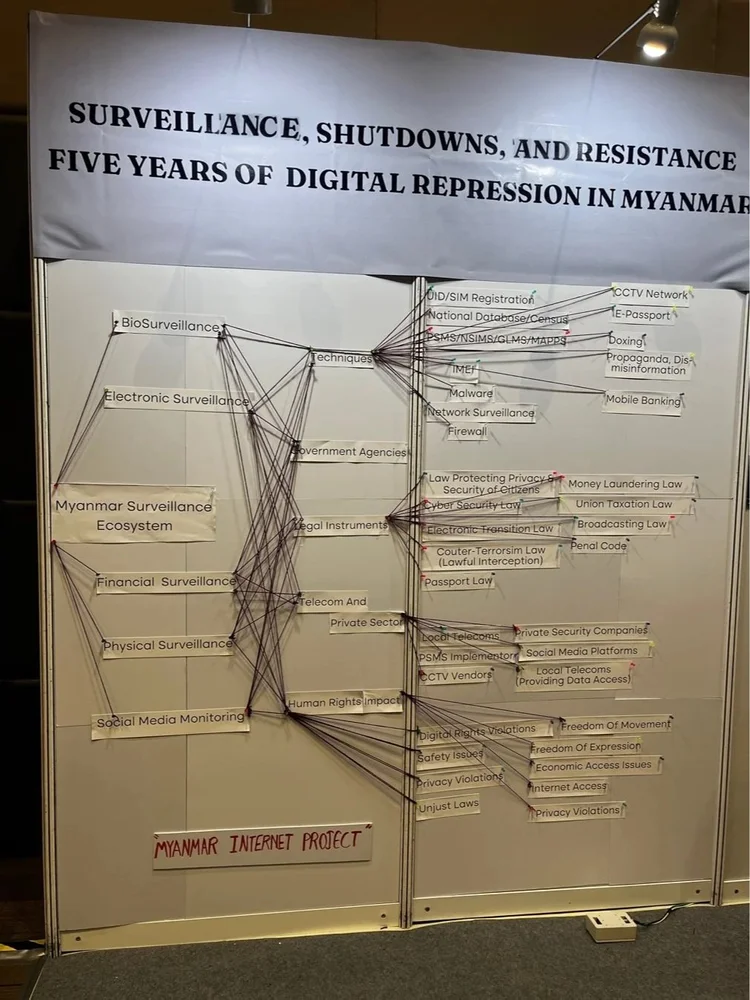
Myanmar Internet Project, DRAPAC conference poster, Manila, Philippines, June 2026 (note that banner above installation was edited using software to remove two lens flares for greater accessibility) In Europe, the Digital Omnibus agreed in June pushed the AI Act's core obligations for high-risk systems from August 2026 out to December 2027 and in some cases even August 2028, and since Annex III counts migration, asylum and border control management as high-risk, the systems used on people on the move received one of the longest reprieves in the package. Perhaps unsurprisingly, while we still await the rules, the infrastructure is moving full steam ahead. The Entry/Exit System became fully operational on 10 April 2026, registering the biometrics of every non-EU traveller crossing a Schengen border. The rebuilt Eurodac database went live on 15 June 2026 alongside the entry into force of the Migration and Asylum Pact, adding facial images to fingerprints and wiring asylum records into the European Search Portal, the Common Identity Repository and the shared Biometric Matching Service, the same searchable identity layer as policing and visa data. Across the Atlantic in the United States, the direction of policy making was even more blunt, with Palantir's ImmigrationOS now serving Immigration and Customs Enforcement (ICE) a consolidated view of people assembled from records that were never collected for immigration enforcement in the first place. And as always, the sharpest edge of these developments is not in Brussels or Washington. Facial recognition supplied by the Israeli firm Corsight has been used since 2024 to identify Palestinians passing through checkpoints in Gaza, one component of the AI-assisted targeting and surveillance apparatus running throughout the ongoing genocide, and in January 2026 the UK Home Secretary announced a rollout of more than fifty live facial recognition vans using that same company's technology on British streets. In Myanmar, the junta spent its sham election period cutting phone lines township by township while operating an e-ID system now tied to bank transactions and SIM registration, a system built with technical assistance from the team behind India's Aadhaar. And in India itself, Delhi Police met student protests this summer with automated facial recognition at Jantar Mantar and micro-geofenced mobile shutdowns authorised under the 2024 Telecom Rules.
|
|
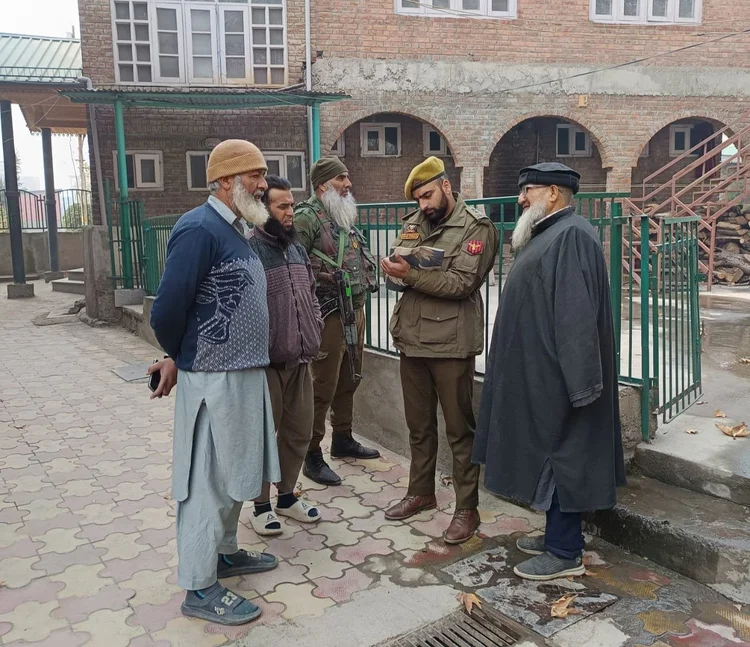
Jammu and Kashmir Police recording the data of mosque committee members in one of the mosques in Kashmir | Caption provided by Shakeen Ahmed | Photo Credit: Kashmir Observer All of these developments were budgeted, procured, and rolled out, and none prompted a single call to slow down by policy makers or tech-bros. And yet - it took the prospect of an agent swarm seizing the internet for Silicon Valley to rediscover the word “slow.’ In early September, Anthropic CEO Dario Amodei published an essay called “We Must Pace the Frontier,” arguing that frontier labs must pace themselves, warning that within six to twelve months a so-called swarm of misaligned agents could be capable of taking over the entire internet. Amodei also committed Anthropic to giving external evaluators employee-level access with the right to publish findings the company itsef cannot edit. His competitors broadly agreed. Not surprisingly, the White House did not, with President Trump offering that "whoever wins with AI wins" and tech adviser David Sacks telling the labs to stop pretending the motivation to slow down is purely altruistic. So let us say the obvious thing first, as those working on actual frontiers: independent monitoring with unedited publication rights is exactly what our sector needs, and we would be glad to help do it. But then there is the darker side to this whole debate, the fact that it took a hypothetical machine escaping its sandbox and threatening those in power to make unregulated AI an emergency, while the harms that have already arrived years ago at borders, in welfare systems, in policing and in detention, never produced an essay, a summit, or an offer of access to anybody's laptop? The Migration and Technology Monitor, alongside many other players in the AI-human-rights space, has long been very vocal in demanding independent control and regulation to prevent what is already happening: the abuse of new technology by people in power, the targeting and further disenfranchising of already vulnerable communities, the concentration of economic and political power in the hands of tech oligarchs, the lack of accountability, the construction of a mass surveillance infrastructure. The list is long. While we are also concerned about how AI systems can easily spin out of control, we need to underline that none of the issues mentioned above has been named by Amodei, Altman, or other CEOs in Silicon Valley. At MTM, we demand that the development of AI not only be slowed down, but that it requires a whole cluster of legal actions that regulate technologies according to the fundamental rights of people. If you want to dive deeper into the topic: read our two latest blog posts by our MTM Fellow alumnus Ankit from India, who engaged in conversation with Indonesian activist Kezia Khatwani on the advancement of technology as a tool of mass surveillance in their countries. Earlier this summer we also published a piece by MTM alumnus Rajendra Paudel, who writes about how migrant workers in the Persian Gulf are dealing with the ongoing war between the US/Israel and Iran.
|
What else has the MTM been up to?
|
|
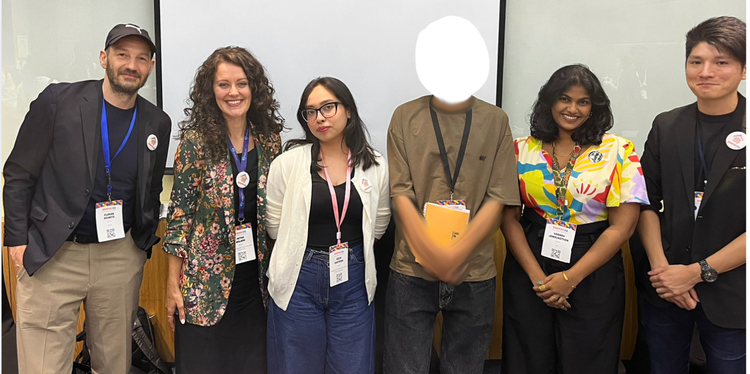
At the MTM, we continue to platform our colleagues-on-the-move, highlighting their amazing work at the intersection of borders and technology. Want to learn more about the outgoing cohort of fellows? Check out our short videos to learn about psychologist Aqila Abdelkarim Ali in Somaliland and Sofia Amimo, a returnee migrant worker in Kenya and stay tuned for others in the coming weeks. The MTM’s global network continues to grow. In June 2026, we participated in the Digital Rights Asia-Pacific Assembly (DRAPAC) in Manila, Philippines, platforming the work of our MTM 2025 Fellow Ankit on a panel on border surveillance, along with ELSAM, the International Detention Coalition, and the United Nations Office of the Human Rights Commissioner.
|
|
From left to right: MTM Staff Florian Schmitz and Petra Molnar, ELSAM’s Kezia Khatwani, MTM Alumnus Ankit (pseudonym for security) International Detention Coalition’s Hannah Jambunathan, and UN OHCHR’s Taisuke Komatsu at DRAPAC, Manila, June 2026 From DRAPAC, a collaborative interview by Ankit, MTM Fellow 2025, and Kezia Khatwani, ELSAM was written: Surveillance, Digital Rights and the Invisible Gaze: A Conversation Across India and Indonesia Surveillance technology does not only assert control over people, it also disenfranchises entire communities. Therefore, it is crucial for researchers, activists, and journalists to exchange information. A great starting point is with MTM fellowship alumnus Ankit from India (pseudonym for security), and Indonesian researcher Kezia Khatwani with the civil society organization ELSAM discussing and comparing the situation in their countries.
|
|
The MTM was also featured in the AI Resist List, a global initiative shining a light on how communities the world over are already resisting AI. The list was compiled by two of our amazing MTM Fellow alumni, Veronica Martinez and Wael Qarssifi! And while our director likes to hide, she published a new book which is open access (a.k.a FREE) called Border Necrotechnics: Automation, Surveillance, and the Racial Politics of Migration Control. Read it, use it, challenge it as you see fit! We are delighted to also be one of the core partner organizations in a brand new multi-year research project funded by the Canadian Social Sciences and Humanities Research Council. It’s called the Algorithmic Justice for Refugees Research Network (AJRRN) and its housed at our academic partner institution, the Refugee Law Lab. We are excited to take part and watch this network grow! And lastly, the MTM is also happy to announce that we are in the early stages of designing a big project in Southeast Asia. We can’t sahre much yet but we will let you know very soon exactly what we're cooking up.
|
|
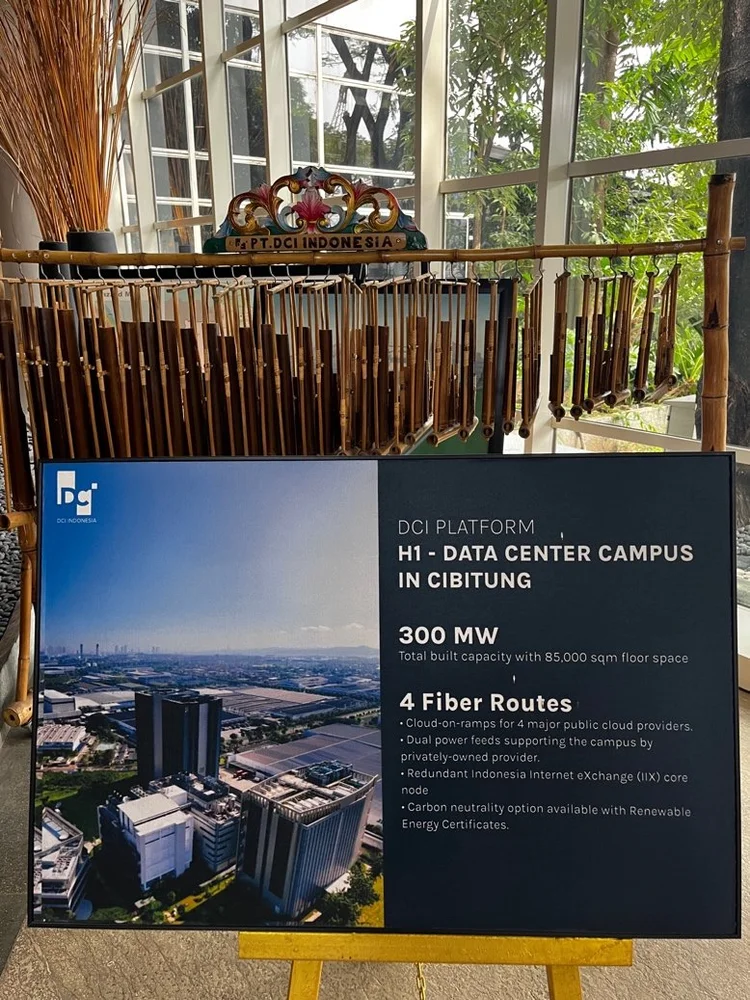
Data Centre in Jakarta, Indonesia, 2026
|
|
Stay in touch by subscribing to our blog. Want more? We also put out a monthly Border Surveillance Industry brief, sign up here. Follow us on Instagram and Bluesky or drop us a line if you want to collaborate. We hope you are finding spaces of joy and rest among all that is happening around the world and that you're ready for the last quarter of 2026! The Migration and Technology Monitor
Incubated at the Refugee Law Lab, York University
|
|
*Note about language: Wherever possible, at the Migration and Technology Monitor, we use the term "people-on-the-move" or “people crossing borders” to expand the terminology commonly used when we discuss human migration and how migration management technologies are experienced. This deliberate use of more inclusive terminology does not seek to undermine the fact that refugees face particular vulnerabilities and often experience higher risks and harms as a result of migration management technologies. It simply highlights that at the end of the day there are people at the center of it all. Moreover, all of us may in one way or another be affected by migration management technologies as we cross borders and move across the world. While its greatest impact is on traditionally marginalized communities such as refugees and asylum seekers, the ecosystem of migration management technologies affects us all.
|
|
|
|